
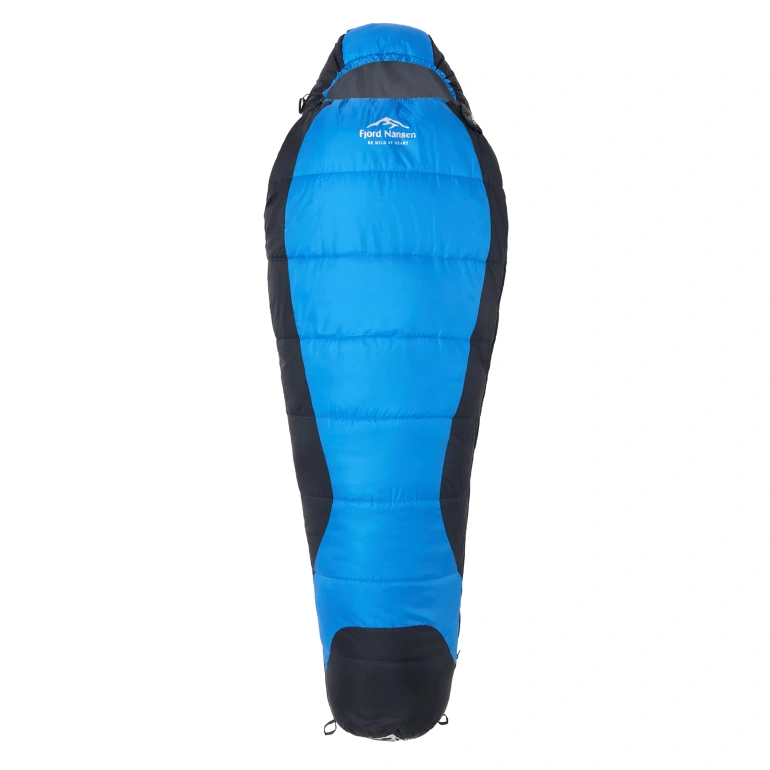
STAVANGER 2.0 XL RIGHT Sleeping Bag -7°C / 2100g
- The latest version of a warm sleeping bag for chilly nights.
- The filling is Eko Loft Hollowfiber – a very warm, lightweight, and soft insulation made of spirally twisted, silicone-coated polyester fibers;
- The inner lining is lightweight and soft to the touch, made of moisture-wicking fibers, which help maintain a comfortable microclimate inside the sleeping bag;
- outer fabric POLY RIPSTOP;
- lining material 290T polyester pongee;
- additional insulation in the lower section;
- a contoured, adjustable hood that protects the head from heat loss;
- the company's two-way zipper, which allows you to regulate the temperature inside the sleeping bag;
- ANTI-BITE – a system that prevents the fabric from getting caught in the zipper;
- a lock covered from the inside by an additional thermal strip;
- The mummy-style design eliminates unnecessary space that needs to be heated;
- extra insulation for the feet;
- Inside, there is a pocket for small valuables (20 x 20 cm) with a tag for the owner's information;
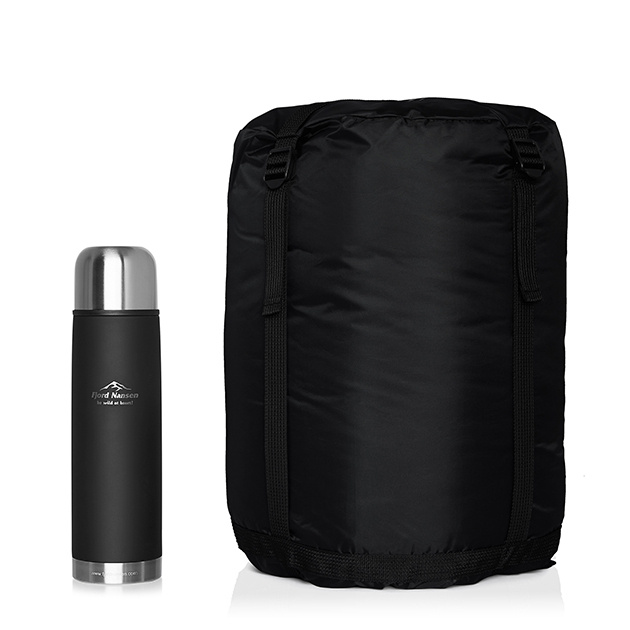
- Included: compression bag.
Technical specifications:
- Maximum temperature T: 15°C;
- Temperature T comf: -2°C;
- Temperature T_(lim): -7°C;
- Extreme temperature (T min): -22°C;
- Maximum user height: 200 cm;
- Total length of the sleeping bag: 225 cm;
- Width of the sleeping bag at its widest point: 85 cm;
- Width of the sleeping bag at its narrowest point: 35 cm;
- weight: 2,100 g.
Warm sleeping bag STAVANGER The new version features a redesigned look, including changes to the color and size. It is filled with Eko Loft Hollowfiber synthetic insulation, which will keep you warm even on very cold days. Several key features have been improved, such as the ANTI-BITE system, which now includes a 3-centimeter-wide strip that prevents the fabric from “getting caught” in the zipper. In addition, there’s a tag in the sleeping bag’s pocket for the owner’s information—indispensable when friends have the same sleeping bag!
Series Outdoor 2.0 It features a new 290T polyester pongee lining in a refreshed color palette, which feels nicer to the touch and improves comfort. The design of the carrying bag—inspired by the Profi collection—has also been updated.
Note: The name includes "T lim"—this is the lowest temperature at which a "standard man" can sleep comfortably. Women or people who feel the cold easily should use the T-comfort rating as a guide when choosing a sleeping bag.
Tests in a climate chamber – Selected sleeping bag models from each collection were tested in the Weiss climate chamber using the complex 16-part DIANA mannequin (in accordance with the European standard PN-EN 13537-2004). The following temperatures were thus determined: T max, T comf, T lim, T min. Next, based on the test results, we calculated the temperature ratings for all Fjord Nansen sleeping bags, thereby minimizing the risk that a customer will purchase the wrong sleeping bag. Before making a choice, ask yourself how sensitive you are to the cold and take that into account when selecting a specific model. In most cases, we should choose a model that's slightly warmer than we had originally planned.
Temperature Ranges According to EN 13537 – These values apply to an average man and an average woman after moderate exercise. NOTE! Sometimes, the sensation of cold may vary from person to person. Factors such as fatigue, hunger, feeling unwell, previous exposure to cold, age, metabolism, body fat, etc., also influence how we perceive cold..
- Upper comfort limit (T max) – the temperature at which a “standard man” does not sweat, and excessive heat does not disturb his sleep.
- Comfort (T comf) – the temperature at which a person is in thermal equilibrium and does not feel cold. This value applies to a “standard” woman who has eaten a full meal, after moderate exercise. Women should consider this factor when choosing a sleeping bag.
- Threshold temperature (T lim) – the lowest temperature at which a "standard man" can sleep comfortably. Men should consider this factor when choosing a sleeping bag.
- Extreme temperature (T min) – falling below this value poses a risk of hypothermia and indicates conditions in which survival is possible for no more than six hours (a parameter based on the perceptions of an “average woman”). We shouldn't base our decision on this temperature when buying a sleeping bag!!
